
A garage door riding on bent or misaligned tracks now is a garage door that's likely to jump the track, jam shut, or strand your car once the first hard freeze hits. Ignoring the grinding noise or the slight hesitation you've been noticing this fall usually doesn't end with the door fixing itself over winter — it ends with a 10pm service call after the door won't budge, or worse, with cables and springs taking on stress they weren't built for and failing too. Catching this now, while the weather still allows for a calm inspection and adjustment, is a lot cheaper than an emergency repair in January.
Symptoms That Point to Track Trouble
- The door looks crooked as it opens or closes, with one side visibly higher or lower than the other.
- Grinding, scraping, or popping sounds coming from the rollers as they travel, especially near the curve where the track turns toward the ceiling.
- The door hesitates or sticks at a specific point in its travel, every time, in the same spot.
- Gaps between the rollers and the track, or a roller that's partly or fully jumped out of the track channel.
- The opener strains or reverses unexpectedly, since it's working against resistance it wasn't designed to overcome.
- The door won't seal evenly at the bottom, leaving daylight or a draft on one side — a real problem once winter air starts pushing through.
What Causes It (In the Order a Technician Checks)
1. Loose or Bent Mounting Brackets
The brackets holding the track to the wall and header work loose over years of vibration from daily use. On older homes with original garage framing, the wood the brackets are screwed into can also loosen or shift slightly over time, letting the whole track drift out of position. This is usually the first thing checked because it's the most common root cause.
2. Impact Damage
A car bumping the door while pulling in, a ladder or bike leaned against the track, or a sharp knock from stored items can bend a section enough to throw off the roller path. This kind of damage is usually localized to one spot and easy to spot once you know to look for it.
3. Worn or Broken Rollers
Old steel rollers, common in older homes with original hardware, wear down and develop flat spots or rust pitting. A worn roller doesn't glide evenly, which puts uneven side-load on the track every time the door moves — eventually bending it.
4. Freeze-Thaw Cycles and Ice Buildup
This is where central PA weather plays a direct role. Moisture gets into the track, freezes overnight, and that ice can force a roller against the track wall or even pop it loose. Repeated freeze-thaw cycles through the winter also stress the metal and loosen fasteners faster than in milder climates, and road salt spray tracked in on tires accelerates corrosion on brackets and track surfaces near the garage entrance.
5. House Settling
In older housing stock throughout the area, slow settling of the structure over decades can shift the garage opening slightly out of square. When that happens, tracks that were installed plumb and level slowly go out of alignment relative to the door itself, even without any single dramatic event causing it.
How It Gets Fixed
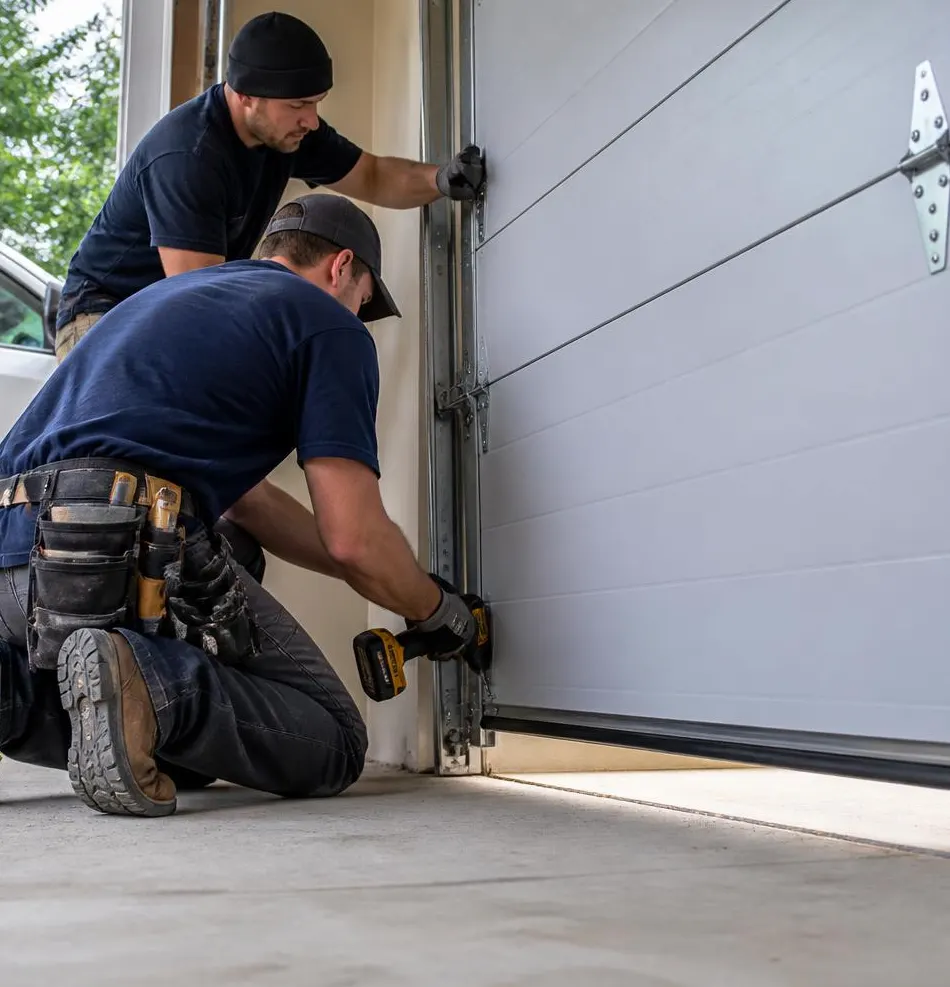
- Minor misalignment: loosen the bracket bolts, tap the track back into correct position with a rubber mallet, check it against a level, and retighten into solid framing.
- Bent sections: a slight bend can sometimes be worked back into shape; a kinked or creased section usually needs to be cut out and replaced rather than bent back, since a repaired kink tends to fail again under load.
- Worn rollers: replacing old steel rollers with sealed nylon rollers reduces noise and wear, and takes uneven stress off the track going forward.
- Full track replacement: needed when the track is too damaged to true up safely. This involves disconnecting the door from the opener, supporting it, and reinstalling a new track section with correct spacing and level.
When to Call Harrisburg Garage Door
If your door is grinding, sticking, or sitting crooked, that's the point to call rather than keep adjusting it yourself — tracks sit close to high-tension springs and cables, and forcing a misaligned door can snap one under load. Our Garage Door Repair service covers exactly this: inspecting the track, brackets, rollers, and hardware, and fixing the actual cause rather than just the symptom. If your door and hardware are getting up in years, our Preventive Maintenance visits catch loose brackets and worn rollers before they turn into a bent track heading into winter.
If your garage door is grinding, sticking, or riding crooked, call Harrisburg Garage Door before the first freeze locks the problem in place.